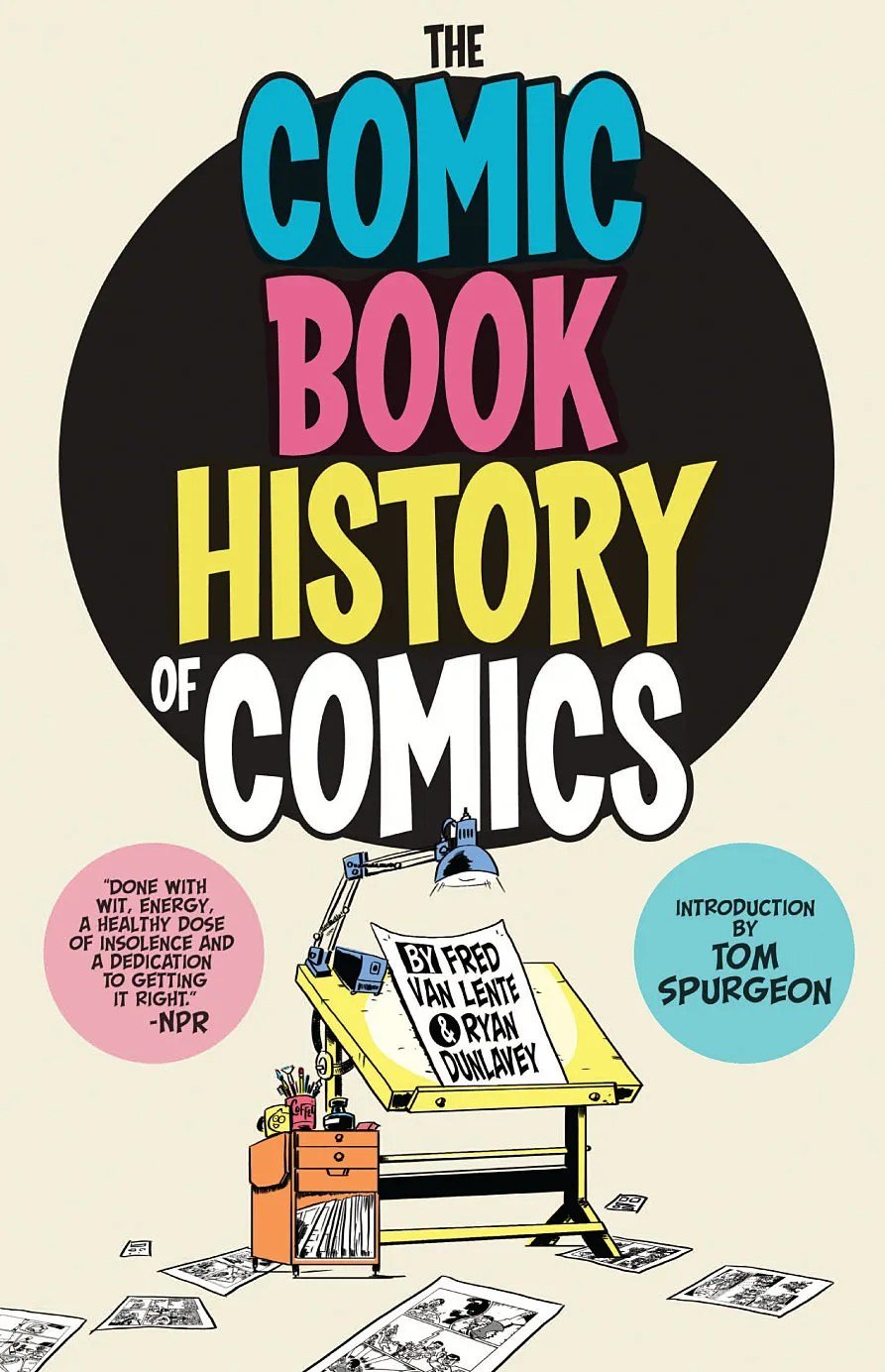
From simple newspaper strips to complex multi-layered narratives that define our pop culture, the Shared Comic Book History is a testament to an art form constantly reinventing itself. It's a journey filled with daring creators, iconic characters, and pivotal moments that reflect and shape societal shifts. You might think of comics as just superhero stories, but their evolution tells a much richer tale of artistic innovation, social commentary, and unexpected resilience.
At a Glance: Key Takeaways from Comic Book History
- Early Roots: Comics sprung from 19th-century newspaper strips and political cartoons, emphasizing sequential art and text.
- The Golden Age Spark: Superman's 1938 debut ignited the superhero genre, propelling comics into mainstream popularity, especially during WWII.
- Challenges and Reinvention: Post-war decline, moral panic, and censorship (Comics Code Authority) forced the industry to adapt and innovate, leading to the Silver Age's character-driven stories.
- Beyond Heroes: Later eras, like the Bronze and Dark Ages, tackled mature themes, social issues, and introduced anti-heroes, reflecting a more complex world.
- Modern Resurgence: Today, comics thrive across diverse genres, digital platforms, and global adaptations, cementing their status as a profound and influential art form.
More Than Just Panels: Understanding Comics' Deep Roots
Before Superman leaped into Action Comics #1, the building blocks of the modern comic book were already being laid. This wasn't a sudden explosion, but a gradual evolution rooted in visual storytelling that stretches back further than you might imagine.
Think of those vibrant, often chaotic, newspaper comic strips from the late 19th and early 20th centuries. Iconic characters like The Yellow Kid and Winsor McCay's surreal Little Nemo in Slumberland popularized the idea of sequential art combined with text, guiding readers through narratives panel by panel. These were the direct ancestors, essentially proto-comic books available daily or weekly in your local paper.
Even earlier, political cartoons, like the powerful work of Thomas Nast exposing "Boss" Tweed's corruption in the 1870s, showcased the power of sequential images to convey complex messages and spark public dialogue. This tradition of using illustrations to tell a story or make a point is a critical piece of the puzzle, demonstrating how visual narrative has long been woven into our communication fabric.
The Platinum Age (1897-1938): Where it All Began
The term "Platinum Age" might not be as widely known as "Golden" or "Silver," but it marks the critical foundational period for comic books as a distinct medium. It's where the transition from newspaper strip reprints to original serialized content truly began.
While The Yellow Kid was a strip, The Yellow Kid in McFadden’s Flats (1897) holds a special place in history because it bore the phrase "comic book" on its cover—a true pioneer. Initially, "comic books" were primarily collections of popular newspaper strips like The Katzenjammer Kids, giving readers a chance to catch up on their favorites. These early compilations were often giveaways or promotional items, not yet a standalone industry.
The game started to change with publications like Comics Monthly (1922), offering a regular dose of reprinted strips. But the real shift came when publishers realized the potential of original content. Funnies On Parade (1933) innovated by presenting its content in color and establishing the now-familiar standard comic book size (6 5/8 x 10 1/4 inches), making it feel like a unique product, not just a reprint collection.
Then came National Allied Publications (the company that would eventually become DC Comics) with New Fun #1 in 1935. This was a monumental step, as it featured all-original material, showcasing the creative potential inherent in the format. It was in this fertile ground that budding talents like Jerry Siegel and Joe Shuster, who were about to change everything, introduced their character Slam Bradley in Detective Comics #1 (March 1937), giving us a glimpse of the revolutionary storytelling to come.
The Golden Age (1938-1956): Superheroes Soar
If the Platinum Age laid the groundwork, the Golden Age built the skyscraper. This era is synonymous with the birth of the superhero and the explosive popularization of the comic book medium.
The curtain rose in June 1938 with the debut of Superman in Action Comics #1. Created by Jerry Siegel and Joe Shuster, he wasn't just a character; he was an archetype, an embodiment of hope and justice. His unprecedented success proved that original content, especially stories about superhuman champions, could captivate a nation. Batman followed swiftly in Detective Comics #27 (1939), introducing a darker, more complex hero.
Publishers scrambled to introduce their own super-powered characters. Timely Publications (the future Marvel Comics) jumped into the fray with Marvel Comics #1 (October 1939), featuring the Human Torch, Angel, and Sub-Mariner. Other enduring icons quickly emerged: Flash, Green Lantern (1940), Captain America, and Wonder Woman (1941) all made their indelible marks during this period.
The timing couldn't have been more impactful. As the world plunged into WWII, these heroes became symbols of American strength and idealism, boosting morale on the home front and inspiring soldiers abroad. Sales boomed, with titles like Superman selling an astonishing 1.5 million copies a month. Comics weren't just entertainment; they were a cultural phenomenon.
However, as the war ended, public interest in superheroes began to wane. Soldiers returned home, the collective mood shifted, and readers craved different stories. This decline paved the way for a surge in other genres: crime, romance, and horror comics quickly filled the void, setting the stage for the next challenging, yet transformative, period.
The Silver Age (1956-1970): A Coded Comeback
The post-Golden Age era saw comics face significant public scrutiny and internal upheaval. The rise of crime and horror comics, often featuring gruesome imagery and mature themes, alarmed parents and educators. This moral panic culminated in Fredric Wertham's controversial 1954 book, Seduction of the Innocent, which claimed comics caused juvenile delinquency.
The outcry led to a Senate Subcommittee investigation into comic books and juvenile delinquency. Rather than face government censorship, publishers self-regulated by establishing the Comics Code Authority (CCA) in 1954. The CCA imposed strict rules, effectively sanitizing comic content, banning gore, overt sexuality, and even specific words like "horror" or "terror" from titles. For a while, this stifled creativity and pushed many smaller publishers out of business.
Yet, out of this restrictive environment, the Silver Age was born. Many historians mark its beginning with the triumphant return of the Flash in Showcase #4 (October 1956), reimagined with a new origin and costume. This demonstrated that superheroes could be brought back, not just as nostalgic figures, but as fresh, modern characters.
Marvel Comics, under the legendary leadership of Stan Lee, Jack Kirby, and Steve Ditko, became the defining voice of the Silver Age. They revolutionized the genre by introducing superheroes with relatable human flaws and struggles. The Fantastic Four debuted in 1961, followed by Spider-Man in 1962, and the X-Men in 1963. These characters argued, had money problems, dealt with self-doubt, and often faced consequences for their actions. This grounded approach resonated deeply with a new generation of readers.
Where Golden Age heroes were often stoic ideals, Silver Age characters were often flawed individuals striving to do good. This era shifted the narrative from overtly dark themes (as seen in some pre-CCA comics) to more campy, yet emotionally resonant, plots. For more on how some of these iconic characters evolved, you can delve into all about Spiderman and Fantastic Four. The Silver Age proved that comics could mature and adapt, setting the stage for even deeper storytelling.
The Bronze Age (1970-1985): Reality Breaks Through
As the 1960s gave way to the 1970s, American society was grappling with seismic shifts: the Vietnam War, the Civil Rights Movement, the Watergate scandal, and a burgeoning drug crisis. Comics, always a mirror to society, began to reflect this new, more cynical reality. This period is known as the Bronze Age, characterized by a willingness to tackle realistic and socially relevant themes.
The strictures of the CCA began to loosen. In 1971, the authority relaxed its standards, notably allowing for the depiction of drug use in a negative light, which was previously forbidden. Marvel's Amazing Spider-Man #96-98 famously tackled drug abuse at the request of the U.S. Department of Health, Education, and Welfare, doing so without the CCA's explicit approval. This bold move challenged the old guard and opened doors for more nuanced storytelling.
Artists like Neal Adams and Frank Miller brought a new level of realism and detail to the artwork, moving away from the more stylized Silver Age aesthetic. Stories became more complex, tackling issues such as racism (Green Lantern/Green Arrow's famous "Snowbirds Don't Fly" arc), political corruption, and environmentalism.
A pivotal, and shocking, moment for many readers was the death of Gwen Stacy in Amazing Spider-Man #121-122 (June-July 1973). This wasn't just a villain-of-the-week defeat; it was a permanent, tragic loss that irrevocably changed Peter Parker's world, signaling a new era where even beloved characters weren't safe from grim consequences.
The relaxed CCA standards also saw a resurgence of classic horror elements, leading to popular titles like The Tomb of Dracula and the introduction of new, more diverse heroes. Characters like Storm (the first major African superheroine) and John Stewart (Green Lantern's second African American bearer) emerged, broadening the representation within the comic book universe. The Bronze Age brought a grittier, more introspective tone, proving comics could mature with their audience.
The Dark Age (1985-1996): Anti-Heroes and Epic Collisions
The Bronze Age pushed boundaries, but the Dark Age shattered them. Kicking off with DC's ambitious Crisis on Infinite Earths (1985), this period was marked by a desire to streamline decades of confusing continuity, but it also ushered in an era of unprecedented darkness, complexity, and anti-heroic narratives.
Crisis on Infinite Earths reset the DC Universe, symbolically clearing the slate for a new generation of creators and readers. What followed was a wave of groundbreaking, often bleak, stories that redefined what comics could be. Alan Moore's Watchmen (1986) deconstructed the superhero mythos, presenting deeply flawed, psychologically complex characters in a cold war setting. Frank Miller's Batman: The Dark Knight Returns (1986) reimagined Batman as an aging, brutal vigilante in a dystopian Gotham. These works weren't just popular; they were critically acclaimed, signaling a shift in perception for the medium.
Major characters faced shocking fates: Superman famously "died" in 1992, and Batman was "broken" by Bane in 1993. The era reveled in moral ambiguity, violence, and pessimistic outlooks. This darker tone, while artistically fertile, also fed into a speculator's market where collectors bought multiple copies of "event" issues, believing they would skyrocket in value.
Independent and creator-owned comics also flourished, with Art Spiegelman's powerful, Pulitzer Prize-winning graphic novel Maus (parts I & II, 1986 & 1991) further demonstrating the medium's capacity for serious, autobiographical storytelling.
However, the speculator boom eventually busted. The market became oversaturated, sales plummeted, and the industry faced significant downsizing. Marvel Comics even filed for bankruptcy in 1996, marking a stark end to an era defined by both its creative brilliance and its unsustainable business practices.
The Modern Age (1996-Present): Diversification and Digital Dominance
Emerging from the ashes of the Dark Age's market collapse, the Modern Age began with a renewed sense of purpose and a focus on sustainable growth. Alex Ross's Kingdom Come (1996) for DC Comics symbolically heralded this shift, offering a more optimistic, albeit complex, look at the superhero legacy.
Publishers implemented leaner business plans, focusing on quality over quantity and catering to a more dedicated readership. While the late 1990s and early 2000s saw some missteps (like the critically panned Batman and Robin film in 1997), the monumental success of The X-Men (2000) helped re-establish the viability and popularity of superhero films, kickstarting the cinematic universe boom we know today.
This era has seen an unprecedented expansion of the comic book medium far beyond its traditional superhero roots. Graphic novels have exploded in popularity, encompassing memoirs, historical fiction, fantasy, horror, and non-fiction. Publishers like Image Comics, IDW Publishing, and Dark Horse Comics, alongside smaller independent presses, have fostered an environment for diverse voices and genres to thrive, challenging the long-standing dominance of DC and Marvel.
Digital comics have become a significant force, increasing global accessibility and offering new ways to read and collect. Platforms like ComiXology (now Amazon's Kindle Comics) and Webtoons have introduced comics to millions of new readers worldwide.
Today, comics are recognized as serious literature, studied in academic settings, and continue to profoundly influence movies, TV shows, video games, fashion, and even political discourse. The Modern Age is defined by its inclusivity, innovation, and its undeniable impact on global culture. From a few panels in a newspaper to a multimedia powerhouse, the journey of web comic monetization strategies and the expansion of the medium continue to evolve.
Beyond the Pages: The Enduring Impact and Future of Comics
The Shared Comic Book History isn't just a timeline of characters and companies; it's a dynamic narrative of cultural evolution. Each era, from the hopeful idealism of the Golden Age to the gritty realism of the Dark Age and the diverse innovation of the Modern Age, reflects the anxieties, aspirations, and changing values of society.
One of the most powerful legacies of this history is the ongoing conversation it sparks about heroism, morality, and identity. Whether it's the archetypal struggle of good versus evil or complex ethical dilemmas, comics have always provided a unique lens through which to explore what it means to be human—or superhuman. The medium's ability to simplify complex ideas through striking visuals and then deepen them with nuanced storytelling makes it incredibly potent. From early political statements to modern social commentaries, comics have consistently been at the forefront of cultural dialogue. You can even see how comics influence adjacent media, such as storytelling in video games, showcasing a broad cultural footprint.
Looking ahead, the future of comics seems limitless. With virtual reality, augmented reality, and interactive storytelling on the horizon, the ways we experience sequential art are poised for another revolution. The emphasis on diverse creators and stories will only grow, reflecting an increasingly interconnected global audience. Comics are no longer a niche interest; they are a universal language, constantly adapting and enriching our shared cultural landscape.
Your Place in the Ongoing Story
Understanding the Shared Comic Book History isn't just about trivia; it's about appreciating the resilience and adaptability of a unique art form. It shows how creators, responding to challenges and embracing new ideas, have continually pushed the boundaries of visual storytelling.
As you revisit classic tales or pick up the latest graphic novel, remember the rich tapestry of innovation that brought them to life. Every panel, every speech bubble, is part of a century-long conversation, a testament to the enduring power of imagination and the human desire to tell stories. So, dive in. Explore a new genre, revisit an old favorite, or even pick up a pencil yourself. The story of comics is still being written, and you're invited to be a part of it.